01
The mandala of pramana—shruti, reason and realization
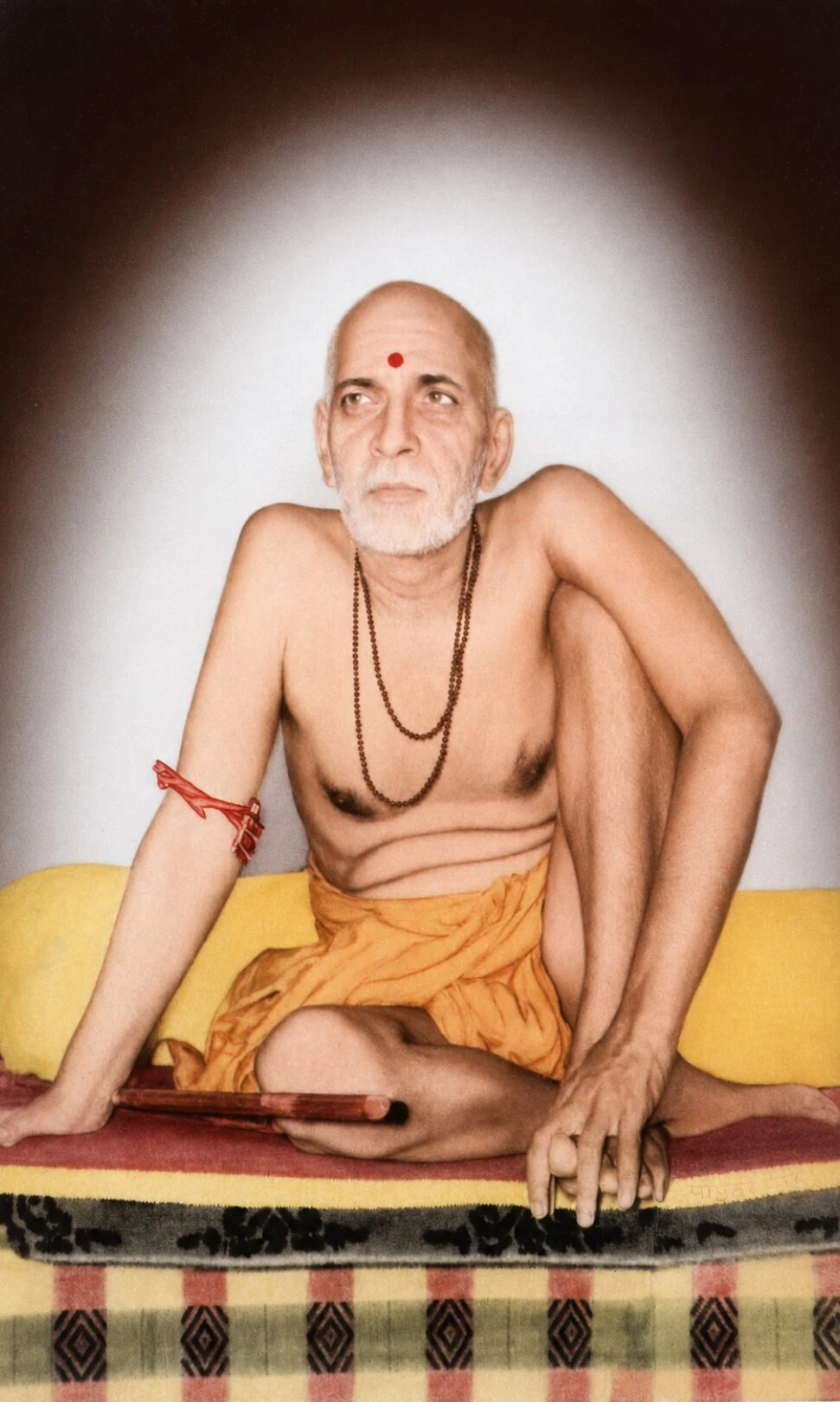
In Dharmasamrat Maharaj Ji’s thought, the Veda is apaurusheya and the foundational pramana for the knowledge of Dharma. Works such as Ved Ka Swaroop Aur Pramanya, Veda-Pramanya-Mimamsa, Veda-Swaroop-Vimarsha and Vedartha-Parijata show that Vedic inquiry was not an external study of an ancient text, but the ground of truth, duty and the highest purushartha.
His shastric method rested neither on blind acceptance nor on intellect alone. The authority of shruti, disciplined reasoning and realization strengthened by sadhana support one another. In this harmony, reading shastra is not merely the acquisition of information; it establishes conviction and conduct in the light of pramana.
- 01
Vedic pramana
- 02
Mimamsa and discernment
- 03
Realization and conduct
02
The mandala of sadhana—karma, upasana and jnana
Dharmasamrat Maharaj Ji did not treat karmakanda, upasanakanda and jnanakanda as three disconnected paths. Each has its place within the order of adhikara, the preparation of the inner being and the highest purushartha.
This synthesis was visible in his conduct: the discipline of tapas and japa, worship of the deities, continuous shastric study, and the teaching of the Prasthanatrayi, Mimamsa, Nyaya, Tantra and Veda during Chaturmasya. Enjoined action refines the inner being, upasana gathers it towards Bhagavan, and jnana illumines discernment of the Self; knowledge is not an escape from duty, but gives nishkama karma its clear direction.
- 01
Enjoined action
- 02
Japa and upasana
- 03
Study and teaching
03
The mandala of aradhana—Advaitic realization and love of Bhagavan
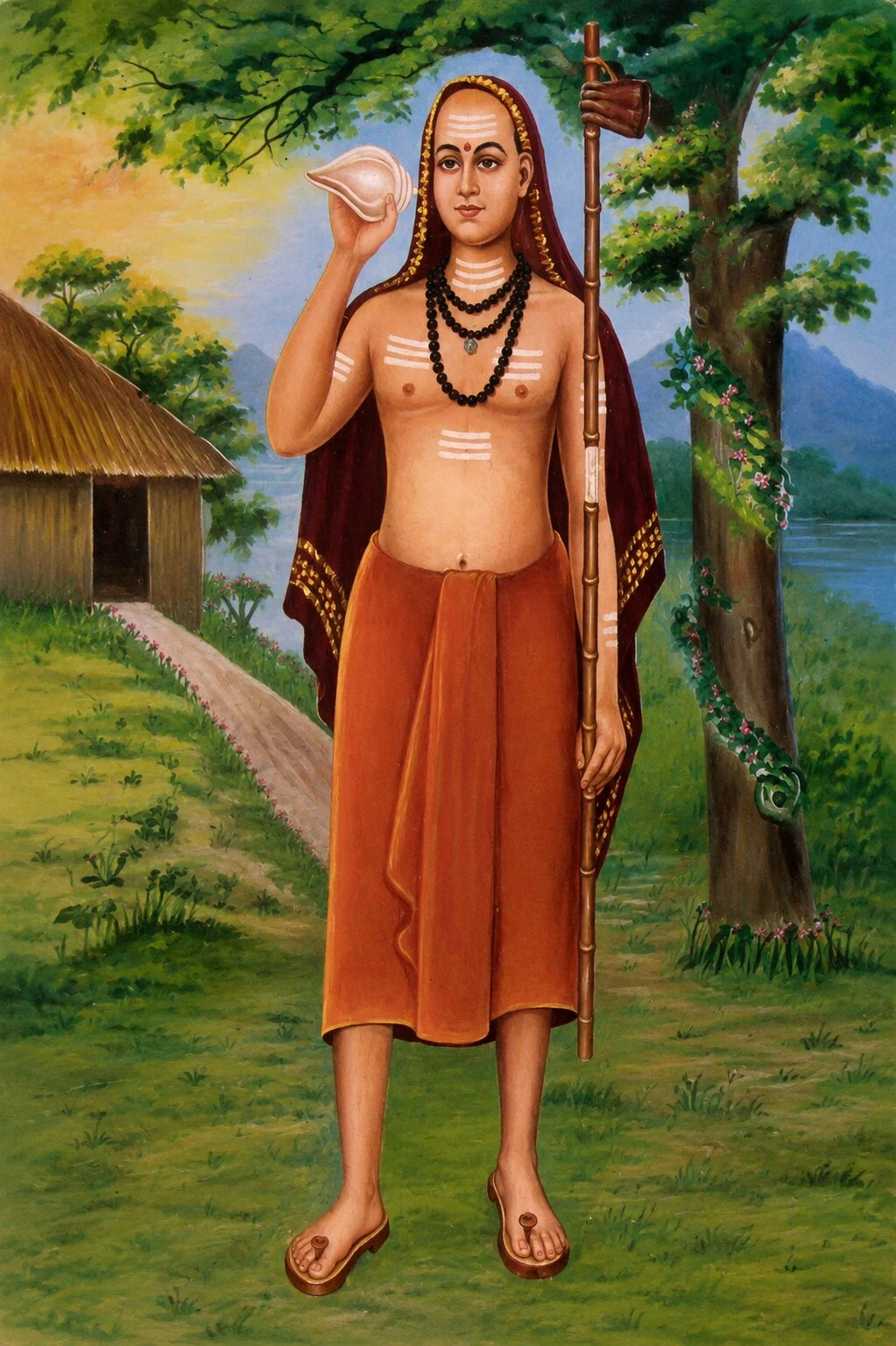
Though established in Advaita Darshana, his sadhana was illumined by worship of Bhagavan Vishwanath, Shri Rama, Shri Krishna, Bhagavati and the Deva Panchayatana. In his vision, Advaitic realization, worship of Bhagavan and conduct guided by shastra completed one another; realization of nirguna Brahman and love for Bhagavan in saguna-sakara form were not opposites.
His devotion to Vishwanath in Kashi, reverence for sacred places and festivals, japa, stotra recitation, listening to divine lila, consecration of deities and the seva of bhoga-raga were as important in his conduct as shastrartha. Knowledge does not become dry intellectualism here, nor bhakti an emotion without discernment; both mature through surrender and maryada.
- 01
Advaitic realization
- 02
Vishwanath and Deva Panchayatana
- 03
The Name, lila and bhakti
04
The mandala of lokasangraha—abhyudaya and nihshreyasa
His spirituality was not confined to individual liberation. Personal conduct, family maryada, the direction of education, social order and the Dharma of governance were interconnected dimensions of the same expansive vision. As a scholar-saint, he did not keep knowledge to himself; he carried it into society through study, teaching, literature and public dialogue.
Sanskrit and Vedic education, Dharma Sangha, publication of texts, Gau-raksha, temple maryada and a public order grounded in Dharma were therefore not separate from sadhana. By holding abhyudaya and nihshreyasa together, this vision turns public action into lokasangraha: action without attachment to its fruits, yet complete in duty and resolved toward the welfare of all beings.
- 01
Education and literature
- 02
Dharma-raksha and maryada
- 03
Abhyudaya and nihshreyasa